
The Tamandua Anteater in Costa Rica: Size, Golden Vest, Steel Claws & Mangrove Habits
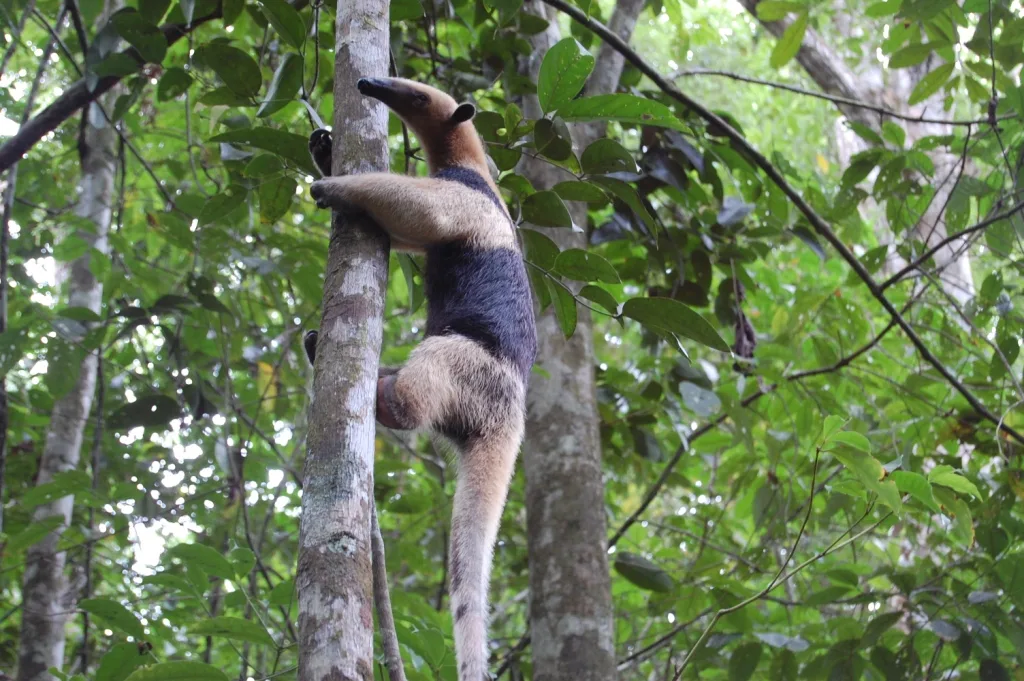
Affectionately known as the anteater in the "black tuxedo vest," the northern tamandua (Tamandua mexicana) is one of the most specialized tree-dwellers roaming the mangrove branches of Sierpe and primary rainforest canopies of Corcovado.
📋 Quick Species Profile: Northern Tamandua Anteater
Tuxedo Markings & Steel Tree-Climbing Claws
The tamandua sports a coarse golden-tan coat accented by a stark black "vest" draped over its shoulders and back. Its front paws feature a massive curved middle claw engineered to tear into rock-solid tree termite mounds. On ground, tamanduas walk on outer knuckles to keep sharp claw points pristine.
* Anteaters forage for tree-nesting termites among overhanging branches on the Sierpe River.
Frequently Asked Questions
How big and heavy is a northern tamandua anteater?
The northern tamandua measures 20 to 30 inches (50 to 80 cm) in body length plus a 16 to 24-inch (40 to 60 cm) prehensile tail, with an adult weight between 7.7 and 13.2 lbs (3.5 to 6.0 kg).
How long is its tongue and how many insects does it eat?
Its tongue extends up to 16 inches (40 cm), coated with sticky saliva. A tamandua consumes up to 9,000 ants and termites daily, spending only 1 to 2 minutes per mound to avoid aggressive soldier stings.
How does an anteater defend itself without teeth?
Completely toothless, a threatened tamandua stands on its hind legs using its tail as a tripod, adopting a 'kung-fu defense pose' with 2-inch steel-like claws. It also emits a pungent musk four times more potent than a skunk's spray.