
Baird's Tapir in Corcovado: Size, Weight, Prehensile Trunk & Rainforest Habits
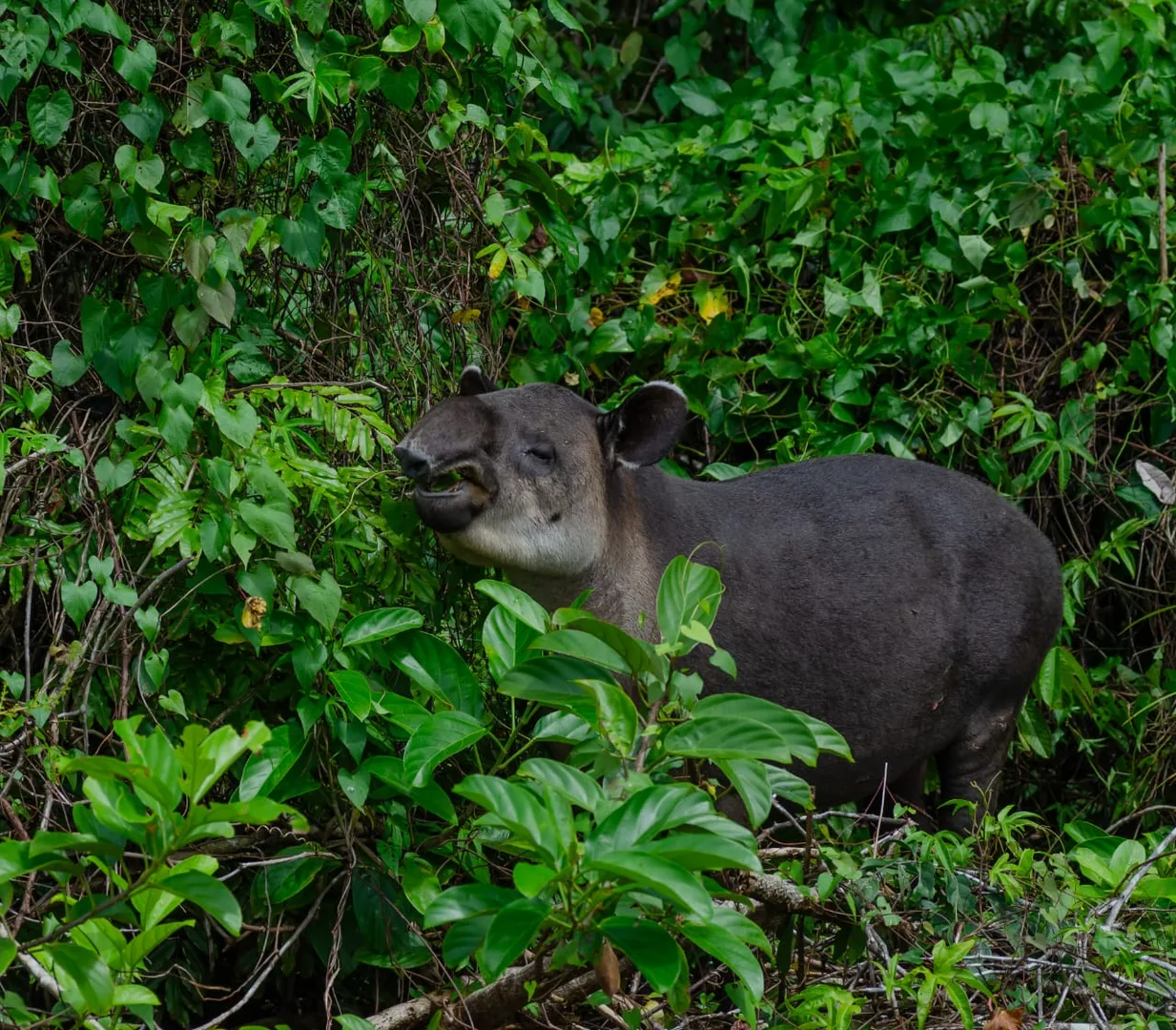
The walking at dawn along the shaded trails of Sirena Biological Station in Corcovado National Park and coming face-to-face with a Baird's tapir (Tapirus bairdii) feels like stepping millions of years back in time. Revered as an authentic living fossil with an evolutionary ancestry stretching back over 20 million years, this gentle giant is the most imposing native land mammal in Central America.
📋 Quick Species Profile: Baird's Tapir
Size, Weight & Evolutionary Relatives
Sporting a barrel-like, wedge-shaped frame built for plowing through dense tropical vegetation, adult tapirs reach impressive metrics: stretching over eight feet in length and tipping the scales at over 650 pounds. Their hide is exceptionally tough, measuring nearly an inch thick across the neck and shoulders to shield against predator bites.
Although resembling an oversized pig, tapirs belong to the order Perissodactyla (odd-toed ungulates). Their closest living taxonomic relatives are rhinoceroses and horses. They sport four toes on front feet and three on rear feet, splaying wide to distribute heavy body weight over rain-soaked mud.
The Prehensile Trunk & Role as 'Rainforest Gardener'
The tapir's most recognizable anatomical feature is its fleshy proboscis: a fused upper lip and nose equipped with intricate musculature. This miniature trunk bends, plucks choice foliage, and gathers fallen canopy fruits with remarkable dexterity. Paired with a keen olfactory sense, tapirs detect waterholes and danger long before eyesight comes into play.
Conservation biologists honor the tapir as the indispensable "gardener of Corcovado's forest". By devouring large tropical fruit varieties and depositing their tough seeds miles away wrapped in natural fertilizer, tapirs perform crucial seed dispersal for dominant rainforest canopy trees.
Watermelon Calves & Semi-Aquatic Secrets
Following an extended 13-month gestation, a mother gives birth to a single calf. For the first six months, the youngster wears an extraordinary camouflage pattern: horizontal white and cream stripes on dark brown fur, affectionately nicknamed the "watermelon suit." This broken pattern mirrors dappled sunbeams on the forest floor, concealing the baby from hunting pumas.
Tapirs are also semi-aquatic enthusiasts. During equatorial midday heat, they submerge into cool rivers, sticking just the tip of their snout above water like a living snorkel.
* Baird's tapirs wander freely across primary rainforest corridors; licensed guides track fresh hoof prints for ethical viewing.
Frequently Asked Questions
How big and heavy is an adult Baird's tapir?
An adult Baird's tapir measures between 6.5 and 8.2 feet (2.0 to 2.5 meters) in total length, stands nearly 4 feet (1.2 m) at the shoulder, and weighs between 450 and 700 lbs (200 to 320 kg). It is the largest native land mammal in Central America.
Why is the tapir called 'the gardener of the rainforest'?
Tapirs ingest massive volumes of wild fruits and seeds without digesting their tough coats. They disperse these seeds intact across vast forest corridors, wrapped in natural fertilizer, actively replanting rainforest canopy giants.
Do tapirs really swim in the ocean?
Yes, tapirs are superb semi-aquatic swimmers. In Corcovado's Sirena sector, tapirs routinely soak in Río Claro and wade into gentle Pacific beach surf to escape midday tropical heat and rinse off skin parasites.
Where is the best place in Costa Rica to see wild tapirs?
Sirena Biological Station within Corcovado National Park offers the highest concentration of wild Baird's tapirs on Earth. Early morning and late afternoon walks frequently cross paths with tapirs browsing along sandy airstrips and coastal trails.