
Green Iguanas & Spiny-Tailed Lizards in Sierpe: Size, Third Eye & River Habits
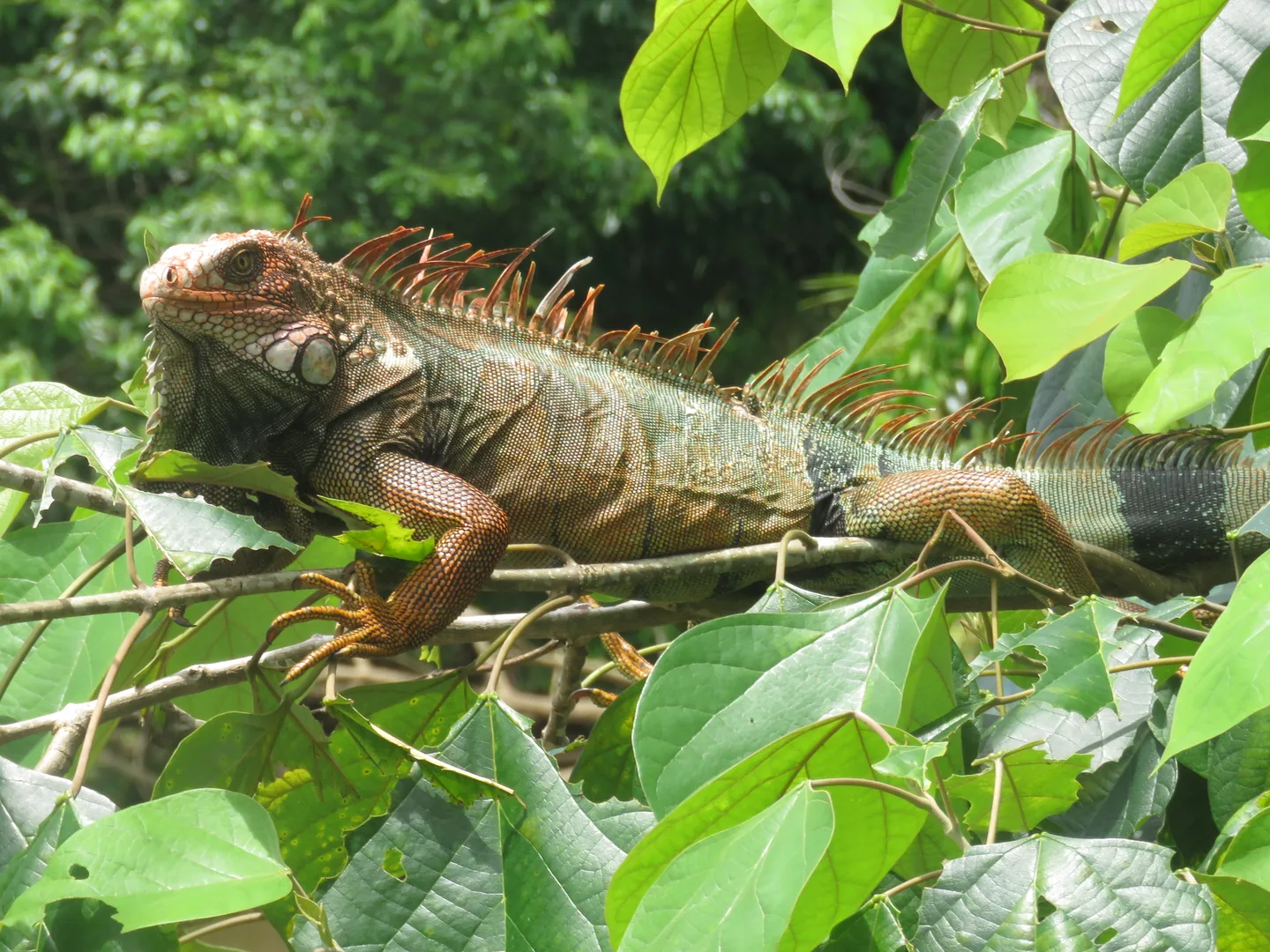
Basking majestically on high branches overhanging the calm waterways of the Sierpe River, the green iguana (Iguana iguana) and its rock-dwelling cousin the black spiny-tailed iguana or garrobo (Ctenosaura similis) are among the most striking reptiles in Costa Rica.
📋 Quick Species Profile: Iguanas in Sierpe
The Parietal Eye & Aquatic Escapes
On the crown of the head, green iguanas possess a specialized parietal eye. This organ senses sudden changes in overhead illumination, alerting the lizard to diving hawks. If threatened, iguanas jump off high branches into the river below, diving deep and holding breath up to 30 minutes.
* Dozens of iguanas sunbathe naturally in mangrove branches along the Sierpe River.
Frequently Asked Questions
How large can a green iguana grow?
Adult green iguanas reach 5.0 to 6.5 feet (1.5 to 2.0 m) in total length (tail accounts for nearly two-thirds of that), with big males weighing 9 to 13 lbs (4 to 6 kg).
What is the iguana's 'third eye'?
Located atop the skull, the parietal eye is a photosensitive retina-like organ. While it does not register sharp images, it senses shadows overhead, warning against diving raptors.
Can iguanas survive high falls into the river?
Yes. When startled in high mangrove branches 40 to 50 feet up, iguanas belly-flop into the Sierpe River unharmed and stay submerged for up to 30 minutes to escape.