
The Puma in Corcovado & San Pedrillo: Size, Weight, Agility & Hunting Habits
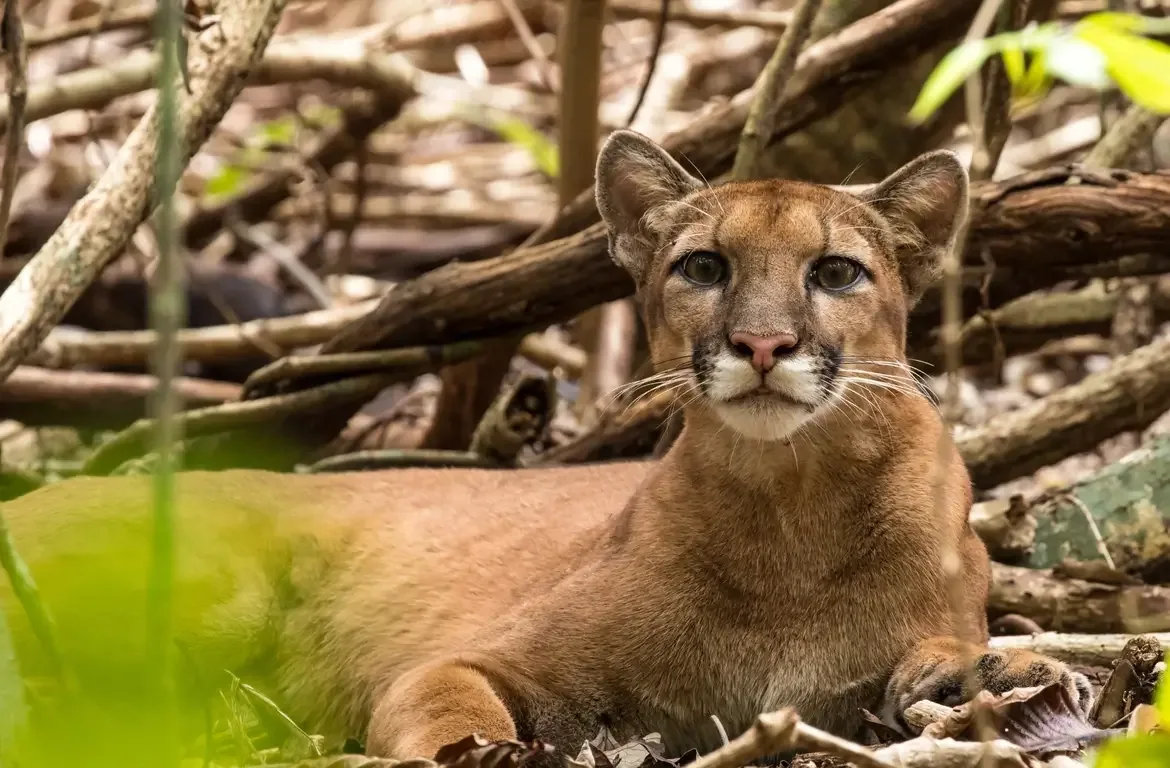
Known as the "ghost of the rainforest" for its uncanny stealth and silent cushioned stride, the puma or cougar (Puma concolor costaricensis) reigns as the second-largest wild cat in the Americas and a master stalker throughout the ancient forests of San Pedrillo and Sirena in Corcovado National Park.
📋 Quick Species Profile: Puma in Corcovado
Biomechanics: Rear Leg Power & Tail Balance
Pumas boast the longest hind legs relative to body size of any felid on Earth. This architectural adaptation provides explosive acceleration and leaping power. Their heavy, cylindrical tail acts as a counterweight, stabilizing dynamic twisting turns when sprinting over slippery buttress roots and steep jungle slopes.
Retractable razor claws stay protected inside fleshy sheaths during travel, preserving needle-sharp edges. Padded paw soles absorb acoustic footsteps, allowing a puma to creep within striking distance undetected.
Why Pumas Purr Rather Than Roar
While the stockier jaguar (Panthera onca) roars with a flexible cartilage hyoid, pumas possess a rigid bony throat. Consequently, pumas purr continuously, whistle like tropical birds, and utter high-frequency squeaks.
In Corcovado, jaguares and pumas share the jungle without lethal conflict through niche partitioning: jaguars favor coastal swamps and sea turtle nesting beaches, while agile pumas dominate inland ridges and hillside waterfalls of San Pedrillo.
* Big cats roam vast, untouched biological corridors; sightings are natural, spontaneous wildlife encounters.
Frequently Asked Questions
How big and heavy is a puma in Corcovado?
Adult male pumas in the Osa Peninsula measure between 6.2 and 8.0 feet (1.9 to 2.4 meters) including their long balancing tail, weighing between 110 and 175 lbs (50 to 80 kg). Females average 75 to 120 lbs.
Why do pumas purr instead of roaring?
Pumas belong to the subfamily Felinae rather than Pantherinae. Their fully ossified, rigid hyoid bone prevents vocal cord vibration for roaring, but enables continuous purring, chirps, and bird-like whistles.
How far can a puma jump?
With exceptionally powerful hind legs, pumas can leap up to 16 feet (5 meters) vertically into low tree limbs and bound over 33 feet (10 meters) horizontally in a single explosive ambush leap.
Is it safe to see a puma on a guided hike?
Yes. In the pristine ecosystem of Corcovado, pumas have abundant prey (peccaries, coatis, agoutis, monkeys) and show healthy wariness toward humans, observing hikers with calm curiosity from thick cover.