
The Scarlet Macaw in Corcovado & Sierpe: Size, Wingspan, Lifelong Mating & Habits
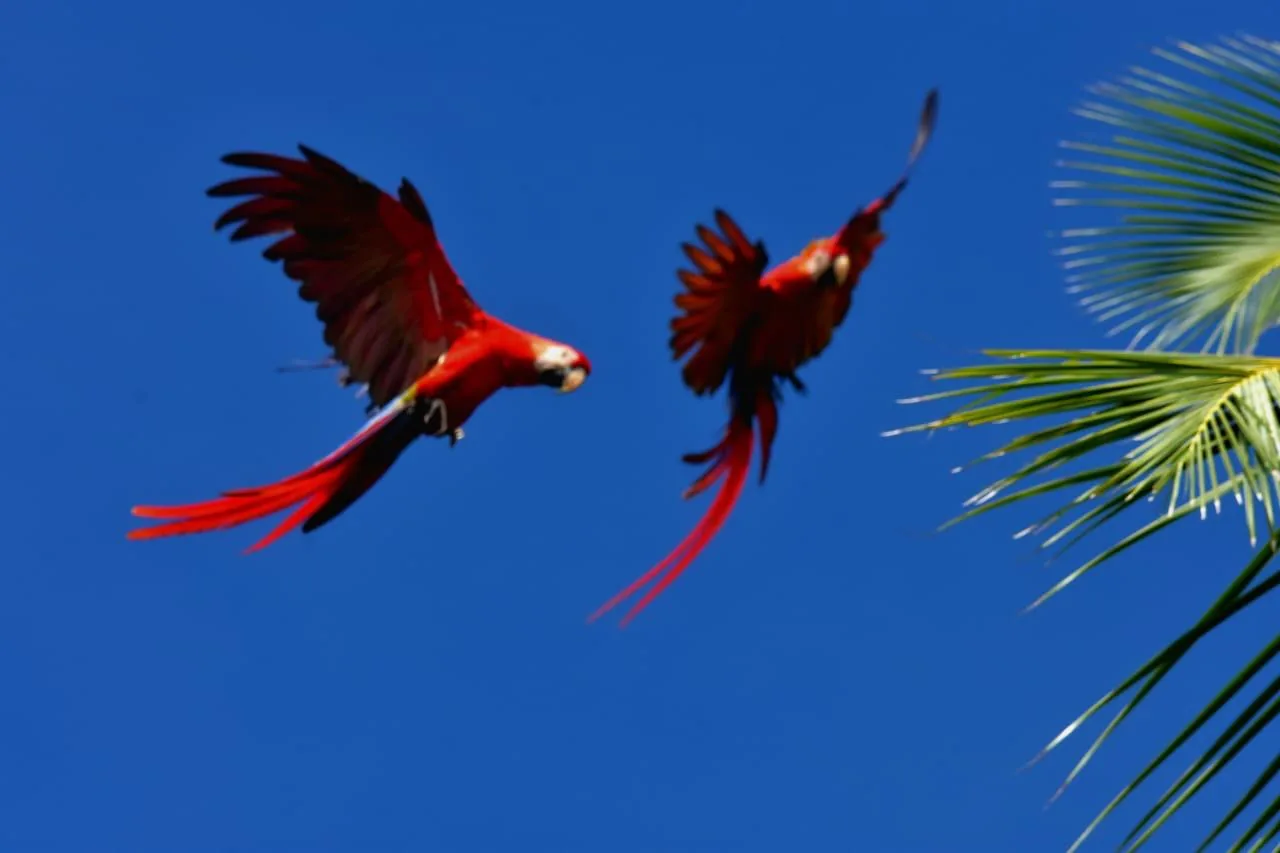
The resonant, prehistoric squawk of a pair of scarlet macaws (Ara macao cyanoptera) sweeping across emerald rainforest canopies in Corcovado and Drake Bay is one of Costa Rica's defining wildlife spectacles. Thanks to decades of dedicated grassroots conservation, the Osa Peninsula now hosts the largest, most vibrant wild breeding population in Mesoamerica.
📋 Quick Species Profile: Scarlet Macaw
Morphology, Rainbow Plumage & Beak Crushing Power
Measuring nearly 38 inches from beak to tail, the scarlet macaw is a striking feathered giant. Its plumage displays a vibrant gradient: vivid crimson on the head and shoulders, bordered by bright canary yellow across wing coverts and iridescent royal blue on flight primaries and tail streamers. The bare white facial patch features tiny red feather tracts forming individual facial signatures.
The hooked maxillary beak serves as a versatile third hand when navigating vertical tree branches and delivers over 2,000 psi of crushing torque, easily splitting stone-hard mountain almond shells that defeat most other rainforest animals.
Lifelong Monogamy & Synchronized Flight
Macaws reach breeding maturity around age four, selecting a lifetime mate. Pairs fly wingtip to wingtip in perfect synchronization, feed each other pre-chewed wild seeds, and groom facial feathers through extensive reciprocal preening.
* Scarlet macaws feed and nest freely along coastal almond trees bordering the Sierpe River.
Frequently Asked Questions
How large is a scarlet macaw?
A scarlet macaw measures 33 to 38 inches (85 to 96 cm) from beak to the tip of its long graduated tail, with a wingspan of 3.3 to 4.0 feet (100 to 120 cm) and an average adult weight of 2.2 to 2.8 lbs (1.0 to 1.25 kg).
Do scarlet macaws really mate for life?
Yes, they form devoted lifelong monogamous pair bonds. Mated pairs stay together for decades (living 40 to 50 years in the wild), synchronizing wingbeats in flight and preening each other's feathers daily.
How powerful is a scarlet macaw's beak?
Their hooked beak exerts up to 2,000 psi of crushing force, easily cracking open rock-hard mountain almond nuts, Brazil nuts, and wild coconuts that no other bird can penetrate.
Where is the best place in Costa Rica to see wild scarlet macaws?
The Osa Peninsula and Sierpe River mangroves support the densest population in Central America. Pairs and flocks are seen flying over docks in Sierpe, Drake Bay beaches, and Corcovado daily.