
The White-Nosed Coati in Corcovado & Sierpe: Size, Weight, Bands & Habits
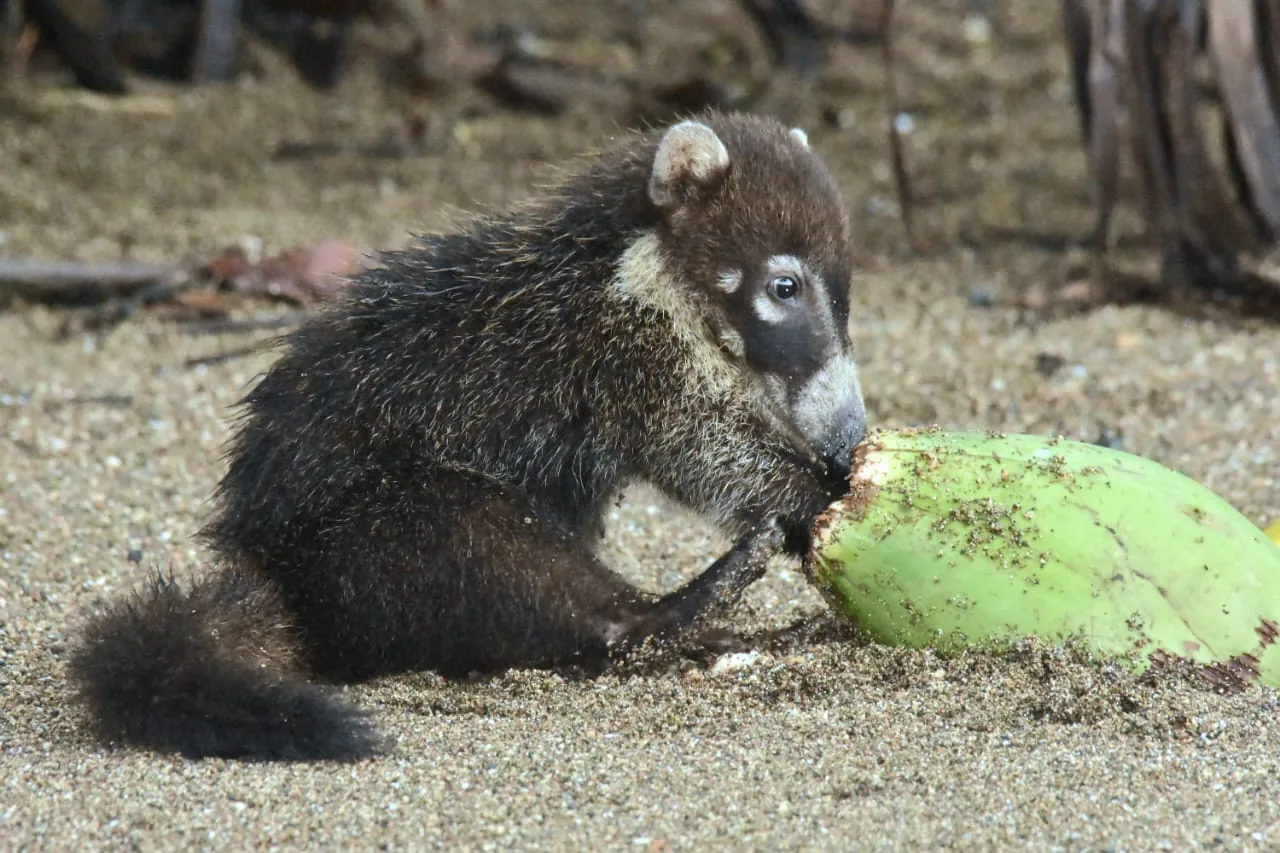
The white-nosed coati (Nasua narica), closely related to raccoons, is one of the most sociable, inquisitive, and active diurnal mammals encountered on the trails around Sirena Station in Corcovado and along the Sierpe River.
📋 Quick Species Profile: White-Nosed Coati
Mobile Snout & Flagpole Tail Communication
Coatis feature a flexible, rubbery snout that swivels up to 60 degrees in any direction, rooting through leaf litter and sand for buried crabs and beetle grubs. Their long, ringed tail stands vertically erect as a beacon for troop cohesion in thick undergrowth.
* Coati bands forage freely along beaches and rainforest paths at Sirena Biological Station.
Frequently Asked Questions
How large is a white-nosed coati?
A coati measures 33 to 51 inches (85 to 130 cm) in total length, with its upright tail making up half of that length, weighing between 7.7 and 15.4 lbs (3.5 to 7.0 kg), with solitary males reaching up to 20 lbs.
Why do coatis walk with their tails held straight up?
Coatis hold their long, ringed tails vertically erect like periscope antennas. The dark tip stays visible above tall jungle ferns, helping group members keep visual contact.
How do coatis climb down trees headfirst?
Their rear ankle joints can rotate a full 180 degrees backward. This anatomical trick allows them to dig their claws into vertical bark and descend headfirst with ease.
How are coati social groups structured?
Coatis have a matriarchal social system: females and young form cooperative bands of up to 30 members. Adult males are strictly solitary, rejoining bands only during brief mating seasons.