
The Yellow-Throated Toucan: Size, Weight, Thermal Beak & Rainforest Calls
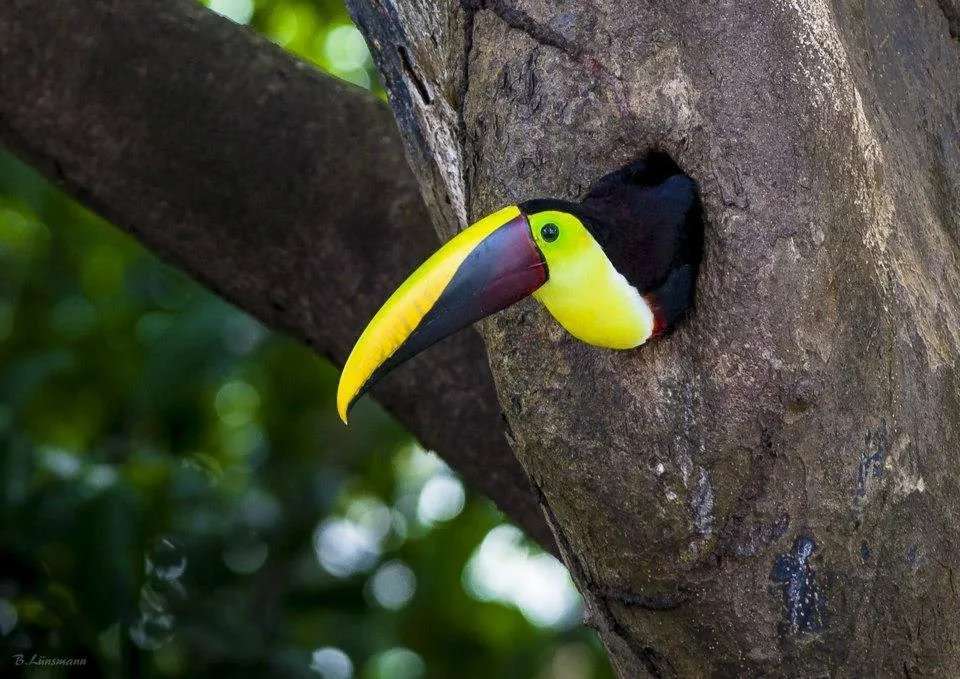
Instantly identified by its oversized yellow and chestnut bicolored bill and vivid canary-yellow throat bib, the yellow-throated toucan (Ramphastos ambiguus swainsonii) is Costa Rica's largest toucan species and the iconic dawn caller throughout the rainforests of Corcovado and Sierpe.
📋 Quick Species Profile: Yellow-Throated Toucan
Nature's Thermal Radiator
Avian physiologists revealed that a toucan's bill functions like an adjustable thermal window. By modulating blood vessel dilation throughout the beak surface, the bird dumps excess body heat in hot tropical afternoons. At night, it tucks its bill under its back feathers to seal in warmth.
* Toucans forage on high Cecropia and fig branches along riverbanks early in the morning.
Frequently Asked Questions
How large is the yellow-throated toucan?
It measures 20 to 24 inches (50 to 60 cm) in total length and weighs 20 to 26 oz (580 to 750 g). The oversized bill reaches 7 to 8 inches (20 cm), the largest in Central America.
Is the toucan's beak heavy?
No, it weighs only about 1.2 ounces (35 grams). Built from a honeycomb mesh of hollow bony struts clad in keratin, it provides rigidity without tipping the bird forward.
How does the beak regulate temperature?
It serves as a thermal radiator. By adjusting blood flow through dense capillaries in the bill, toucans release excess tropical heat or conserve core warmth at night.